
You just bought a new car, or you’re close to it. Someone at the dealership or a detailing studio has already thrown three products at you — ceramic coating, graphene, PPF — and you’re supposed to pick one without really understanding what any of them do. Nobody’s explaining it clearly and all three cost real money.
So here’s the plain version.
What you’re paying for
All three sit on top of your factory paint and protect it from damage. Where it gets confusing is that they protect against completely different things.
Ceramic coating is made of silicon dioxide liquid, and this compound binds chemically to your paint upon curing. It creates a hydrophobic surface meaning water droplets bead and roll away rather than settle in one place. Your car will remain cleaner between washes; it will be faster to wash and you even get some extra UV protection at the same time. This is especially important in Indian summers where constant sun exposure silently oxidises paint before you even know it happened.
Graphene coating is ceramic with graphene added. Graphene is a single layer carbon structure with the durability of diamond and lightweightness of aluminium combined. Graphene adds two features ceramic cannot provide on its own: it is anti-static so dust has nothing to stick to, and it absorbs less heat allowing water droplets to bead and roll away without ever evaporating. If you have ever found yourself cleaning your car twice within an hour due to water spots, you understand why graphene coating is crucial.
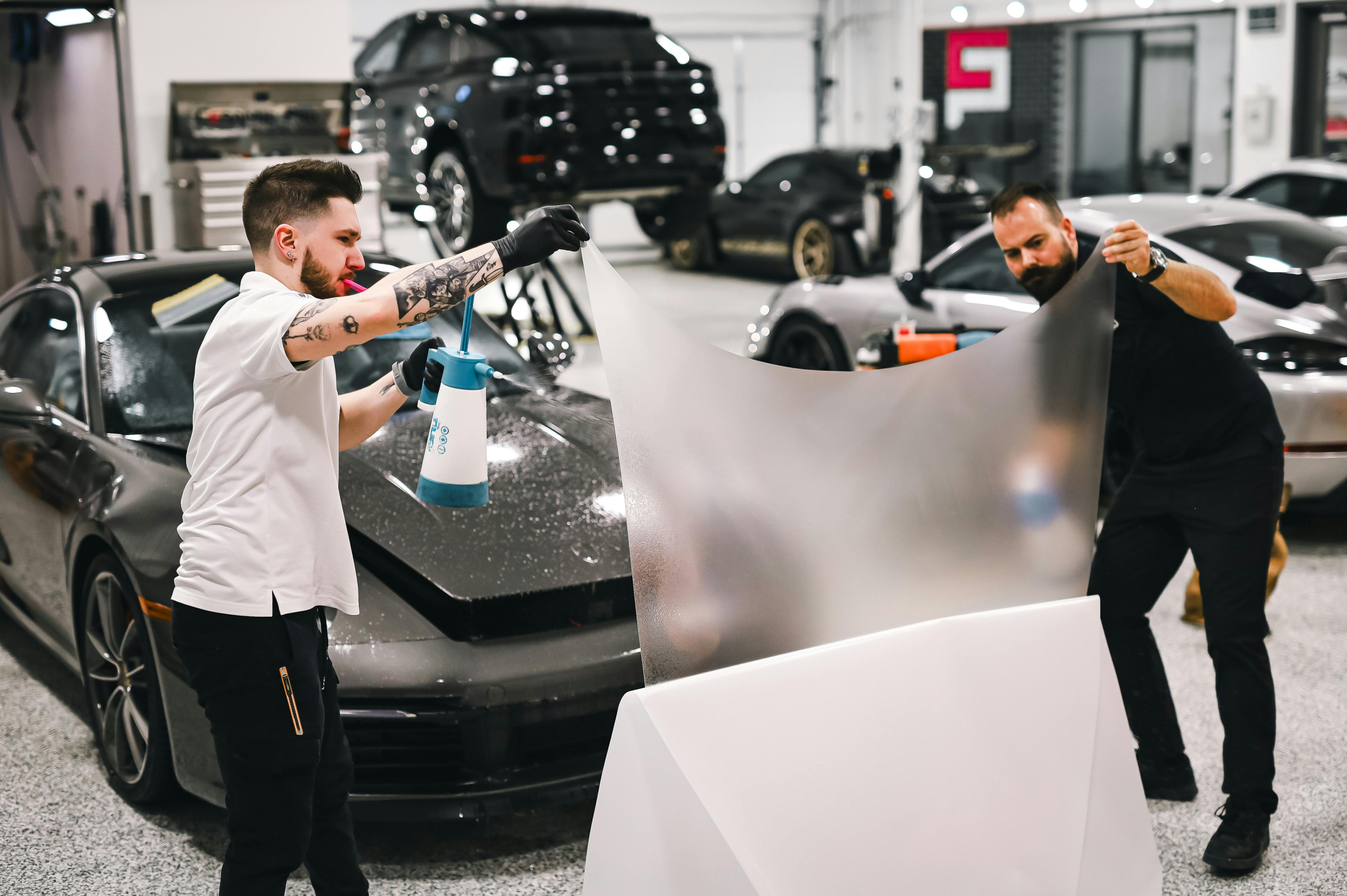
PPF is a different product entirely. It’s a physical thermoplastic polyurethane film that sticks to your paint and takes impacts so your paint doesn’t have to. Rock chips, highway gravel, door edge scratches — it absorbs all of it. And when the film itself picks up minor scratches, a bit of heat makes them disappear. That self-healing part is something neither ceramic nor graphene can do.
What it costs
Ceramic: Rs. 15,000–45,000. Graphene: Rs. 35,000–50,000. PPF starts at Rs. 85,000 and crosses Rs. 2,30,000 for bigger cars or full coverage.
Ceramic and graphene go on in a day. PPF takes 2–3 days minimum.
What to actually pick
Mostly city driving? Ceramic or graphene. If you’re in NCR, graphene is worth the extra spend. The dust here is genuinely relentless, and without anti-static coating, your car looks dirty a day after washing. Graphene buys you noticeably more time between washes — not a dramatic difference on paper, but one you actually feel when you own the car.
Regular highway driving? Your front end is collecting chip damage you probably won’t notice until the paint’s already gone. Ceramic and graphene won’t stop that. PPF will. If you’re doing the Delhi-Agra or Delhi-Jaipur run even occasionally, PPF on the front impact zones isn’t paranoid — it’s just what makes sense.
Want the proper setup? Combine them. PPF on the front bumper, hood, fenders and mirrors, graphene on everything else. More expensive upfront, but you’re getting actual impact protection where the car takes hits and a deep gloss across the rest of it. It’s the most complete thing you can put on a car right now.
Before you book anything
Get it done at a studio that knows what it’s doing. Badly applied PPF looks terrible and can trap moisture under the film. Poorly done ceramic won’t bond properly and will start peeling. The product quality matters, but so does the installer. Don’t spend on the right product and then cut corners on the application.
Drop a comment if you have questions about what makes sense for your specific car. I’m Kshitij Dedha from Car Sidekick and I’m happy to help you work it out.